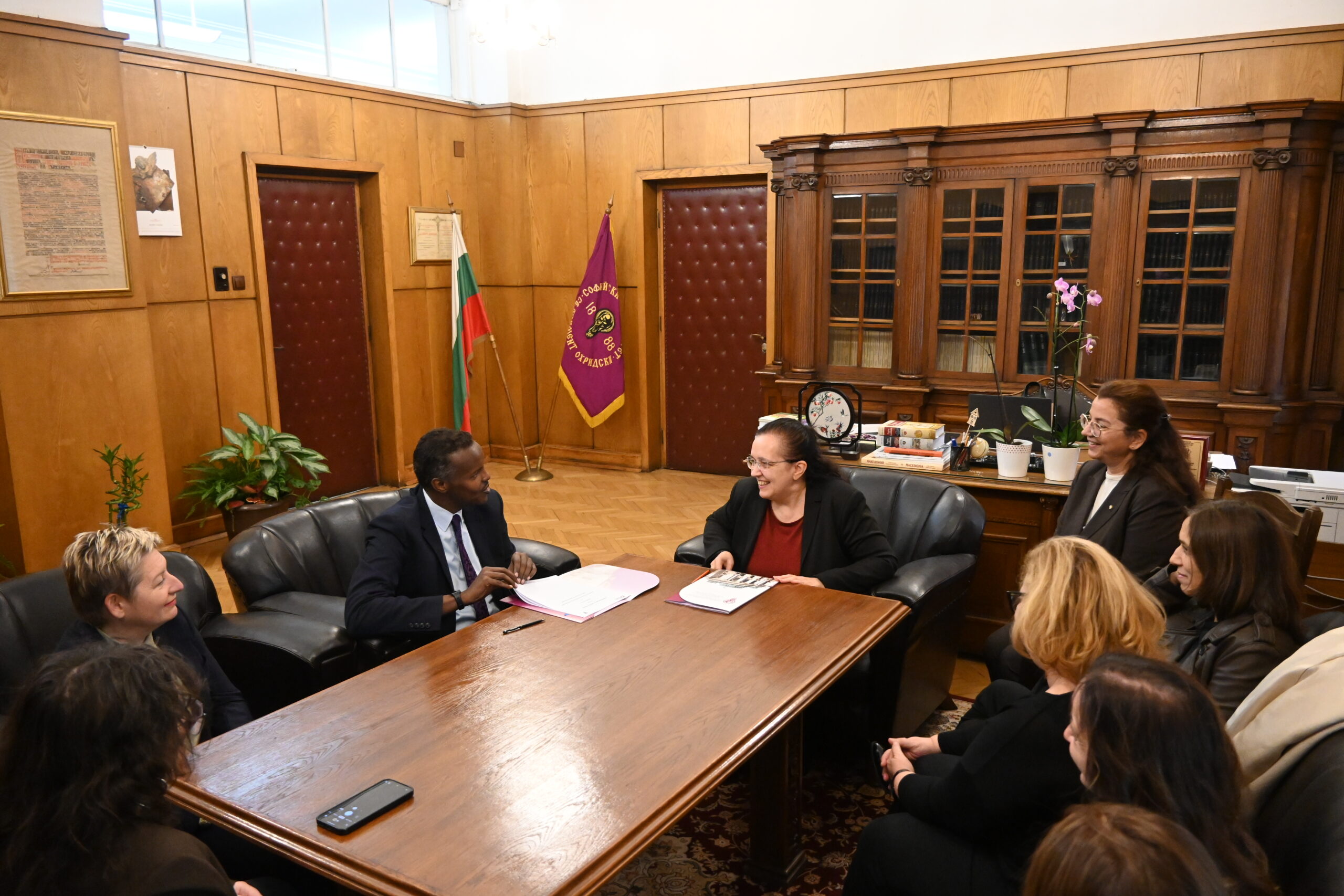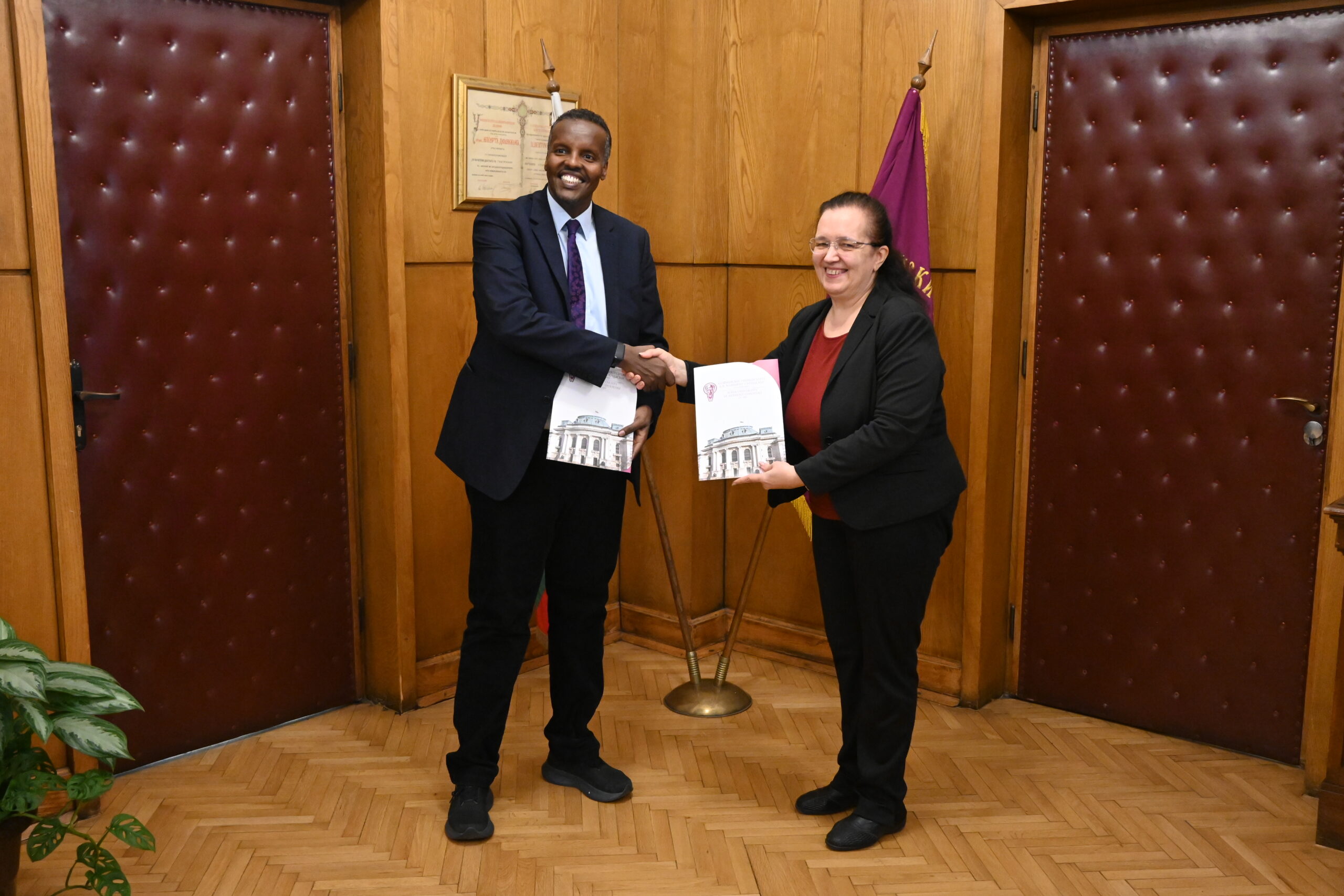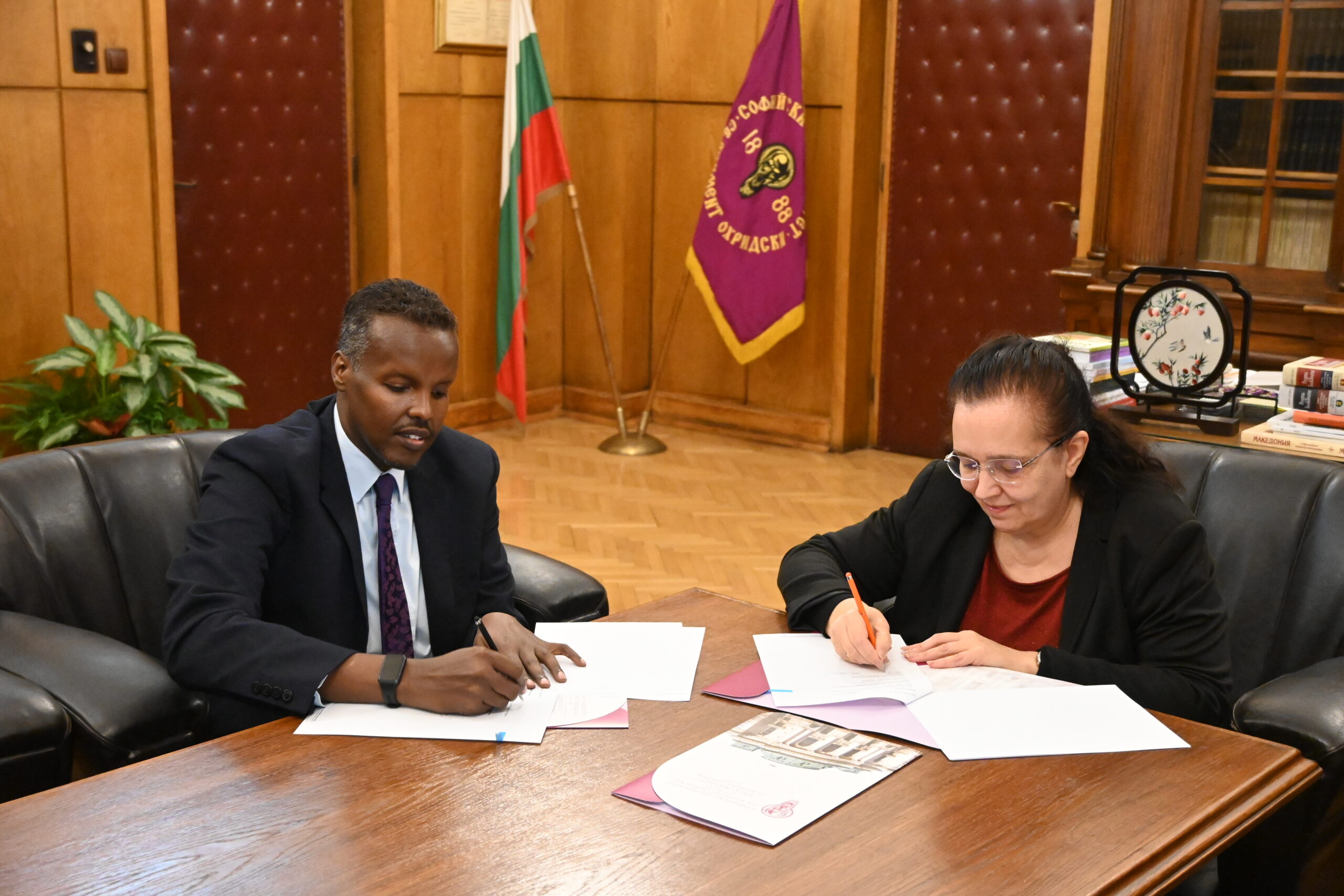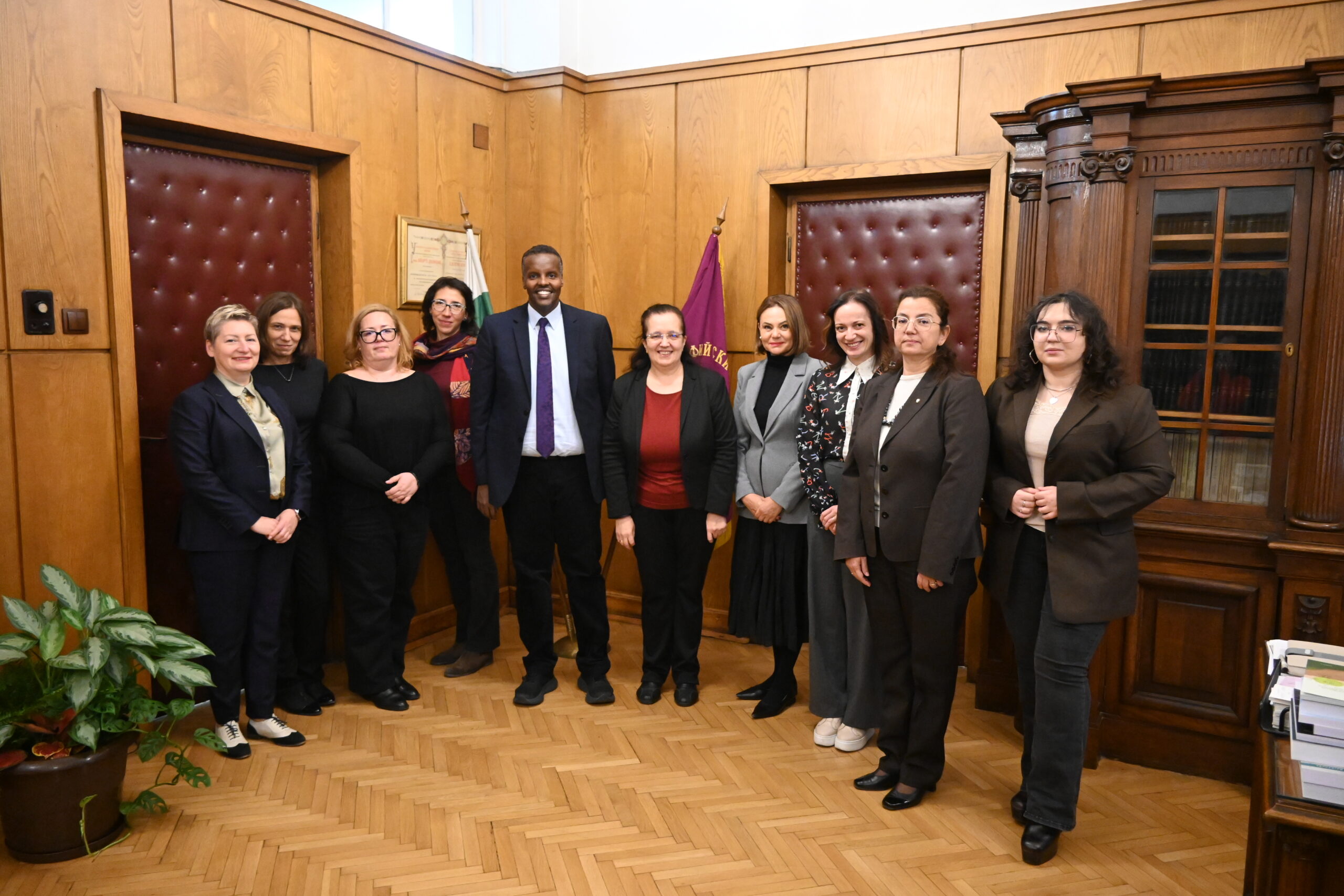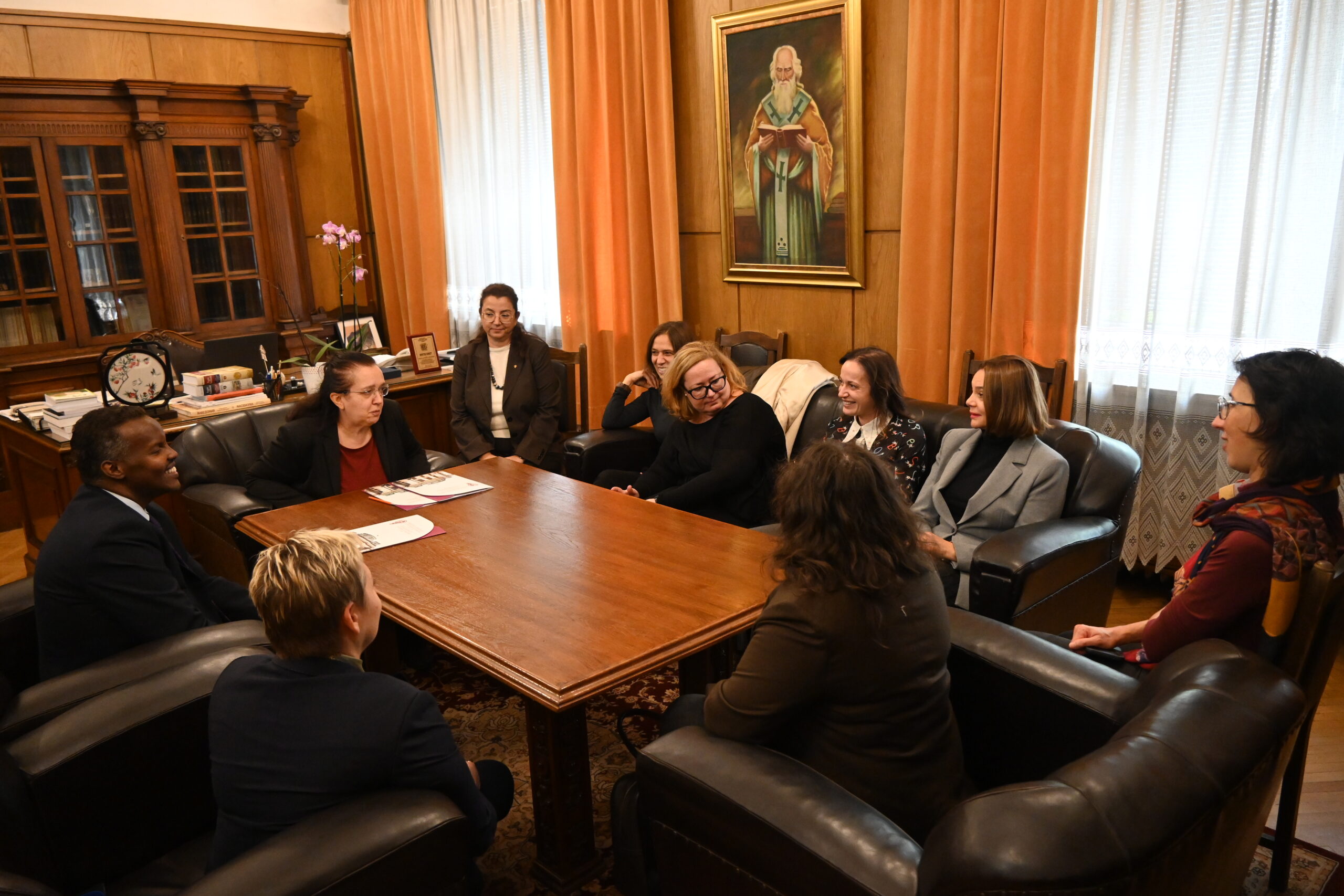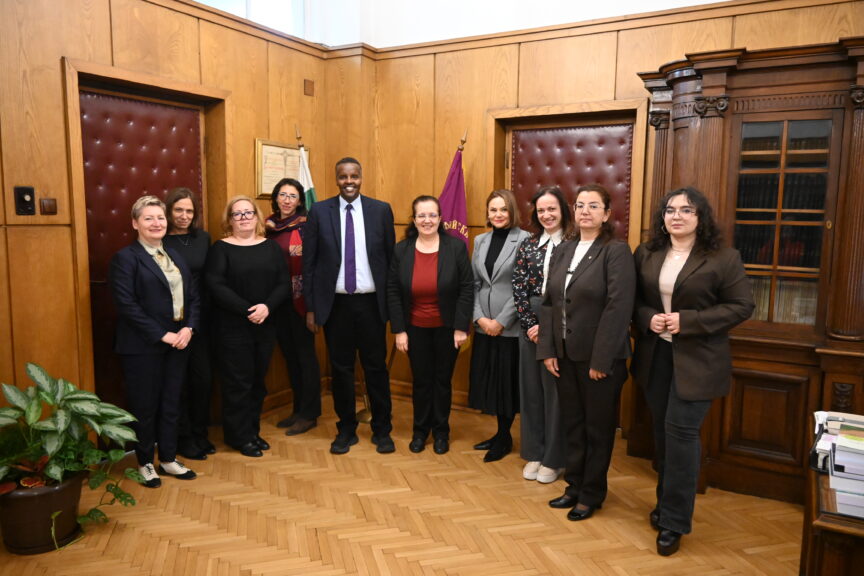
The Rector of Sofia University “St. Kliment Ohridski”, Prof. Dr. Eliza Stefanova, and the Country Director of the British Council for Romania and Bulgaria, Abdo Hassan, signed a memorandum of understanding (MoU) aimed at developing joint educational initiatives with the university’s Faculty of Economics and Business Administration. The meeting was also attended by Prof. Dr. Sc. (Econ.) Sonia Mileva-Bozhanova, Vice-Rector for Accreditation and Ratings, Career Development, Alumni, and Relations with Employers and Businesses at Sofia University “St. Kliment Ohridski”, and Elena Yordanova, Deputy Executive Director of the British Bulgarian Chamber of Commerce (BBCC), of which both the Faculty of Economics and Business Administration and the British Council are members.
Prof. Eliza Stefanova and Abdo Hassan expressed their satisfaction with this new step in the long-standing, fruitful partnership between the two institutions in the field of education, conveying their confidence that joint initiatives will continue in the future. During the discussions, they addressed opportunities to link the educational partnership with students’ career realization, the importance of language skills and internationally recognized qualifications for academic mobility and professional growth, as well as prospects for closer interaction between the university and employers through collaboration with the British Council and the British Bulgarian Chamber of Commerce.
The memorandum outlines frameworks for cooperation in English language learning and assessment, professional development for teaching staff and personnel, and the internationalization of higher education. The British Council—the UK’s international organization for cultural relations and educational opportunities—will partner with the Faculty of Economics and Business Administration to develop mutually agreed-upon activities.
English Language and Internationally Recognized Qualifications
The agreement foresees exploring opportunities to utilize Cambridge English Qualifications and IELTS for the professional development of faculty members, as well as potential tools for assessing students’ language proficiency upon admission or graduation. Information sessions and workshops regarding the format, content, and purpose of language examinations are also planned.
Students, faculty, and administrative staff at Sofia University “St. Kliment Ohridski” will be eligible for preferential terms under the memorandum. Discounts on language courses cannot be combined with other offers or promotions.
Students, faculty, and administrative staff will have opportunities to participate in in-person and online language training under additionally agreed conditions. The collaboration also includes professional development opportunities for English language teachers through training sessions and methodological workshops.
International Partnerships and Academic Exchange
Potential focus areas include knowledge exchange and institutional capacity building under the Going Global Partnerships program, alongside promoting partnerships between UK and Bulgarian higher education institutions within the framework of the UK–BG Transnational Education initiative. Support for inclusive education, joint research, and academic exchange is also planned.
The parties will explore options for joint educational fairs, information campaigns, roundtables, and other academic events, including providing facilities for exams and meetings.
A Partnership Opening New Horizons
The signing of the memorandum marks a new stage in educational cooperation between the United Kingdom and the European Union. Following the terms agreed upon in December 2025, the parties signed the legal texts on April 15, 2026, enabling the UK to rejoin the Erasmus+ program starting in 2027.
In this context, the partnership between Sofia University and the British Council takes on particular significance. It creates opportunities for enhanced language preparation, closer academic ties, and more active participation in international educational exchange. For students and educators, this offers prospects for acquiring new knowledge, building connections, and launching joint projects that unite university communities and turn education into a shared space of trust and opportunity.